

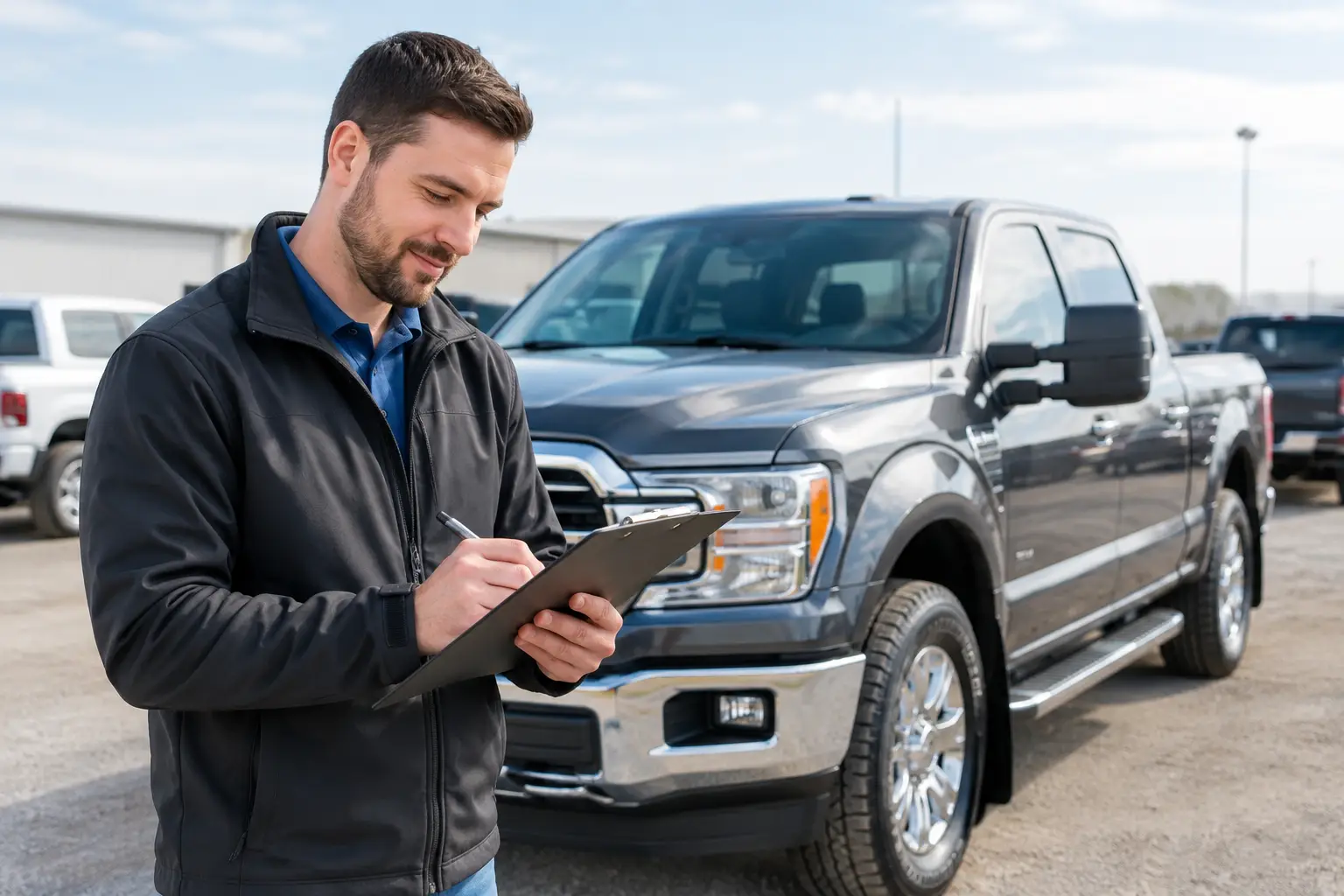
A used truck can put an owner-operator on the road for far less than a new model, but the purchase still has to make sense to a lender. So, do lenders fund used trucks? Yes. Many commercial lenders finance used semi-trucks, box trucks, dump trucks, vocational trucks, trailers, and other revenue-producing equipment. Approval depends on the truck, the borrower, and whether the payment fits the business’s cash flow.
For a trucking business, used equipment financing is not a second-choice product. It is often the practical way to add capacity, replace an unreliable unit, or become an owner-operator without taking on a new-truck payment. The key is knowing what lenders see as financeable before you sign a purchase agreement or put down a nonrefundable deposit.
Do Lenders Fund Used Trucks With Bad Credit?
They can. Good credit usually gives a borrower access to more lenders, lower rates, longer terms, and lower down payment options. It is not the only path to financing, though. Some equipment finance programs are designed for applicants with challenged credit, recent credit events, limited time in business, or a thin commercial credit profile.
When credit is less than perfect, lenders place more weight on the full file. They may look closely at the truck’s value and condition, your industry experience, current contracts or revenue, bank activity, and the size of your down payment. A strong operating history can help offset a credit score that does not tell the whole story.
Expect trade-offs. A credit-challenged approval may require more money down, a shorter term, proof of income, or a truck that meets tighter age and mileage standards. That is still very different from being unable to buy equipment. The right lender match matters because not every lender has the same credit box.
What Makes a Used Truck Financeable?
Lenders finance the equipment as well as the borrower. Since the truck often serves as collateral, they want confidence that it has usable remaining life and can retain enough value through the loan term.
The biggest factors are usually the truck’s age, mileage, make and model, purchase price, condition, and source. Late-model trucks with reasonable mileage and documented maintenance are generally easier to finance than older units with unknown histories. That does not mean an older truck is automatically disqualified. Specialty and vocational equipment can have different underwriting standards, particularly when the asset has a clear resale market.
A lender may also compare the agreed purchase price with an equipment valuation. If a seller is asking well above market value, the lender may limit the advance amount. In that case, the buyer may need to renegotiate the price or cover the gap with a larger down payment.
Private-party sales can be financeable, but they often receive additional scrutiny. A purchase from an established dealer usually gives lenders a clean invoice, title trail, and easier verification of the equipment. With a private seller, be prepared to provide the VIN, title information, payoff details if there is a lien, photos, and any maintenance records available.
Age and mileage are guidelines, not the whole decision
There is no single maximum age or mileage rule across commercial lenders. Some programs focus on newer equipment, while others will consider older trucks if the deal is supported by a solid borrower profile and a sensible loan term. A ten-year-old truck with a well-documented rebuild may be a better financing candidate than a newer truck with major deferred maintenance.
Before applying, get the VIN, exact odometer reading, year, make, model, specification sheet, seller quote, and service history. Those details allow an advisor and lender to assess the unit early, rather than discovering an equipment issue after you have committed to the deal.
What Lenders Review Beyond the Truck
The equipment matters, but the payment must work for the business. Lenders generally want to see how the truck will produce revenue and whether the business can handle the monthly obligation alongside fuel, insurance, maintenance, permits, payroll, and existing debt.
Owner-operators may be asked about their CDL, driving experience, authority status, dispatcher relationship, or lease-on arrangement. A trucking company may need to show business bank statements, recent revenue, customer contracts, fleet information, and proof of insurance. Newer businesses may have fewer financial records, so personal credit, industry experience, and a reasonable down payment can carry more weight.
For established businesses, strong deposits and consistent cash flow can improve the file even if a past credit issue appears on the report. Lenders prefer clear explanations over surprises. If a late payment, tax issue, or business interruption affected your credit, address it directly and provide context when possible.
Documents That Can Speed Up Used Truck Financing
A complete application prevents delays. Requirements vary by loan size, credit profile, truck type, and time in business, but most used truck financing requests start with basic borrower and equipment information.
You may need the following:
- A completed application with business and owner information
- A seller’s quote or purchase order showing the truck price and VIN
- Recent business bank statements
- A driver’s license and CDL, if applicable
- Proof of insurance or an insurance quote
- Business formation documents and EIN verification
- Prior-year tax returns or financial statements for larger requests
- Maintenance records, photos, title details, or payoff information for private-party purchases
Not every applicant needs every item. A well-qualified borrower purchasing a newer truck from a dealer may qualify through a streamlined process. A startup, private-party deal, older truck, or challenged-credit file often needs more documentation. Sending clean, readable records upfront is one of the simplest ways to protect your timeline.
Choose a Payment Structure That Fits Your Operation
The lowest monthly payment is not always the best financing choice. Extending the term can improve monthly cash flow, but it may increase total interest and can be difficult to arrange for an older truck. A larger down payment lowers the financed balance, yet it should not leave the business short on fuel money, repairs, insurance deposits, or working capital.
Match the structure to the truck’s expected working life and your operating plan. If you are purchasing a dependable late-model unit for long-haul work, a longer term may be appropriate. If you are buying an older local-delivery truck, a shorter term may better reflect its remaining useful life. The goal is a payment the business can support without putting routine operating expenses on high-cost credit.
Also ask whether there are prepayment terms, documentation fees, warranty requirements, GPS requirements, or seasonal payment options. These details can affect the real cost and flexibility of the financing.
A Practical Way to Apply Before You Shop Too Far
Getting pre-qualified early gives you a clearer budget and reduces the risk of chasing a truck that does not fit lender guidelines. It also gives you leverage when speaking with dealers, who tend to move quickly when a desirable unit arrives on the lot.
Start with your target payment, available down payment, preferred truck type, and a realistic price range. Then gather your bank statements and basic business documents before selecting a truck. Once you find a unit, submit the seller quote and VIN promptly so the equipment can be reviewed.
A financing marketplace can be especially useful when the deal has moving parts: a newer business, an older truck, a private seller, a credit challenge, or a request for a higher amount. TruckingLoans works with a broad lending network to help applicants compare equipment financing paths instead of relying on one lender’s approval criteria.
When Used Truck Financing May Not Be the Best Fit
Sometimes the best move is to pause rather than force a weak deal through. Be cautious if the truck has a poor maintenance history, the seller cannot provide clear title documentation, the price is far above market value, or the projected payment leaves no room for repairs and slow weeks.
It may also make sense to consider a different unit, add a down payment, or use working capital separately for startup costs rather than rolling every expense into an equipment loan. Financing the truck is only one part of building a stable operation. The truck still needs insurance, maintenance reserves, fuel, and reliable freight to earn its keep.
A used truck does not have to be perfect to be financeable. It needs to be a sensible business asset, priced fairly, supported by documentation, and paired with a payment your operation can carry. Get the financing conversation started before the right truck gets away, then buy with enough room left in your budget to keep it moving.
